Without good data, there is no smart warehouse
July 23, 2025

In today’s competitive logistics environment, every second counts, and every decision depends on data. Yet, many warehouses still operate with incomplete, inaccurate, or outdated information. While automation and AI are often hailed as the future of smart warehousing, they’re only as effective as the data they’re built upon. In short: without good data, there is no smart warehouse.
Why data quality matters
Warehouses generate huge volumes of data every day - from stock levels and item locations to environmental conditions, robotic activity, and worker performance. But volume alone isn’t enough. For data to be valuable, it must be:
- Timely - available when decisions need to be made
- Accurate - free from human or system error
- Complete - covering all aspects of the warehouse environment
When any of these elements are missing, risks can multiply. Inaccurate stock levels can lead to missed shipments. Incomplete tracking can result in lost inventory. Delayed information can stall operations. Ultimately, poor data quality creates an effect that limits performance at every level.
Warehouses that still rely on manual inputs or isolated systems are vulnerable. A misplaced scan, a lagging update, or a disconnected spreadsheet can disrupt the workflow. According to industry data(1), organizations with poor inventory practices have an average inventory accuracy of just 63%, far below the level required for responsive or adaptive operations.
The hidden costs of bad data
Many of the pain points in warehouse operations stem directly from unreliable or incomplete data. Poor visibility leads to poor forecasting. Errors in counting or location tracking turn into fulfillment delays, overstocking, or stockouts. Time is lost chasing down errors or correcting mistakes that shouldn’t have occurred in the first place.
There’s also a broader cost: strategic stagnation. Without good data, it becomes difficult to evolve toward a more intelligent warehouse, one that can drive faster, more accurate decisions. Whether you're integrating automation or exploring AI tools, unreliable data will lead to unreliable outcomes. Even the most advanced technologies can't compensate for poor inputs.
"Manual processes typically yield 1 error per 300 items counted - compared to just 1 error per 3 million scans with barcode systems."
The observable advantage
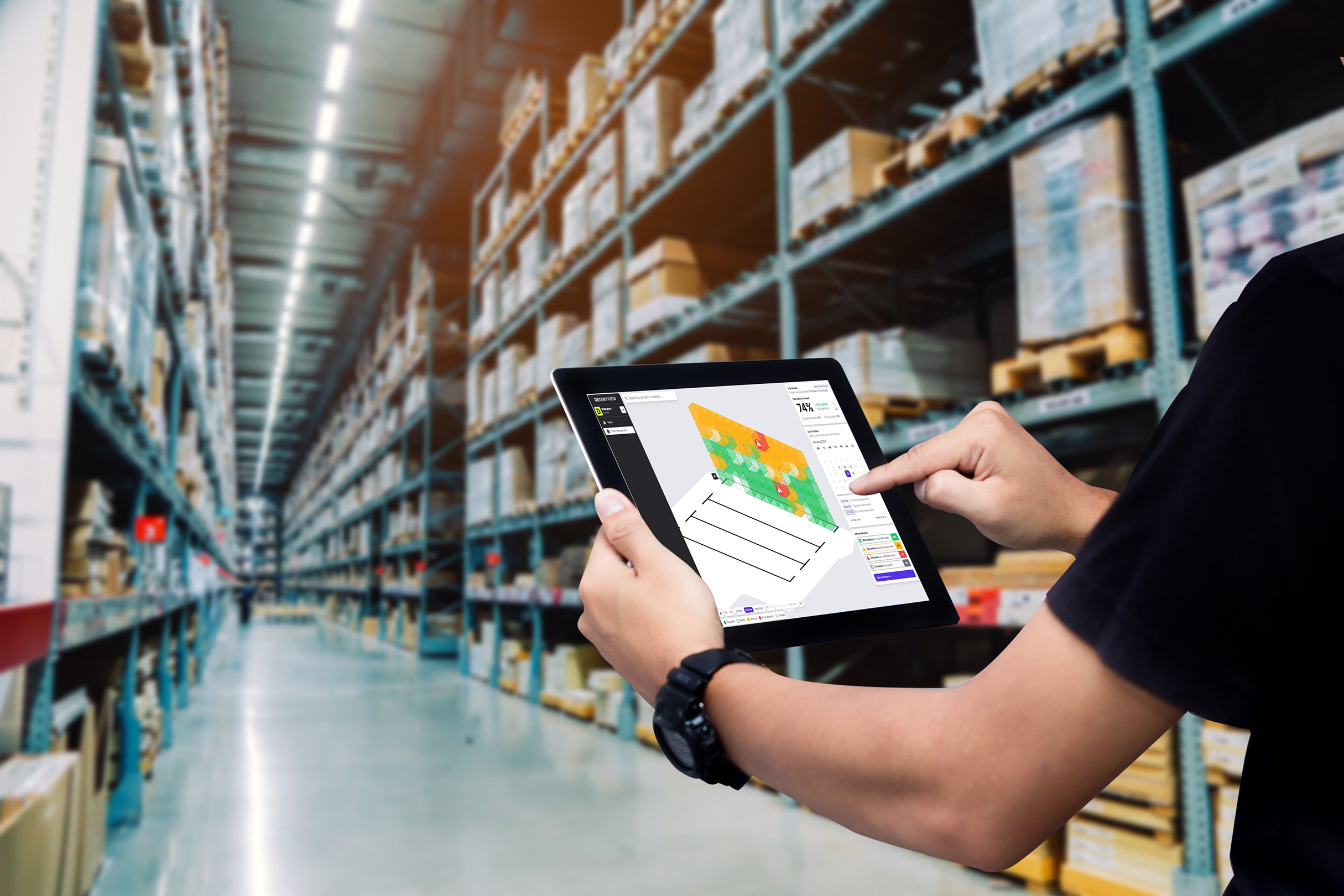
The shift from a Blind warehouse to an Observable warehouse is about more than just visibility. It’s about creating a trustworthy data foundation. Observable warehouses use technologies such as sensors, barcode scanners, RFID tags, autonomous robots, and warehouse management systems (WMS) to generate and collect data across operations.
This data doesn’t just sit in a dashboard; it flows into decision-making processes, enabling smarter routing, faster response to disruption, and more informed staffing or inventory moves. Most importantly, it opens the door to the next evolution: warehouses that don’t just react to data, but act on it autonomously.
"The disruption caused by moving from a blind to an observable warehouse is significant. It’s a complete change of paradigm." - The Journey to Adaptive Warehouses (Dexory, 2025)
With real-time, high-quality data, warehouses can shift from reactive to proactive by spotting patterns before they become problems, balancing labor more efficiently, and improving fulfillment speed and accuracy.
Looking ahead: AI demands accuracy
There’s a common misconception that introducing AI can ‘fix’ warehouse inefficiencies on its own. But AI is not a magic tool - it’s a solution that depends entirely on the quality of the data it’s fed.
“Without visibility, AI can’t function. And without AI, true warehouse adaptation isn’t possible.”
Before any warehouse can evolve into a smart, intelligent operation, it must first invest in the systems that deliver good data. This means not only the right technologies, but also the right processes and culture to ensure that data is respected, verified, and acted upon.
.png)
Start with the signal
In the push toward smarter warehouse operations, data is the foundation everything else runs on. Visibility, automation, AI - none of it performs without accurate, trustworthy, and timely information.
High-performing warehouses start by getting that data right, captured continuously and at scale by the right technologies like autonomous robots and sensors. Facilities that skip this step fall behind on fill rates, labor efficiency, and the ability to commit to SLAs with confidence.
Dexory is built for this foundation layer. Daily wall-to-wall scans and a live digital twin of every location push clean data into the systems your team already uses, turning information into action.
If your data isn’t ready, your warehouse isn’t either.
To learn more - read our recent whitepaper [link]