Warehouse scanning technology: why data collection differs
October 1, 2026

Warehouse scanning has evolved quickly. Across distribution centers, handheld scanners, forklift-mounted cameras, drones and autonomous robots can all make inventory capture faster.
But they are not solving the same problem. The data collection methods each technology uses determine what questions it can actually answer.
The important question isn't just “How quickly can I scan my warehouse?” The better question is: “How consistently can I understand what is happening - and what can I do with that information?”
Handheld scanners
Handhelds are familiar, flexible and easy to use. But every scan requires someone to physically do it.
The data is also relatively narrow: typically a barcode, a location and a timestamp. Collecting more data requires more labour. So visibility tends to be periodic - during cycle counts, investigations, or specific warehouse processes.
Good data, but relatively few data points, collected relatively infrequently.
Forklift-mounted scanning
Putting cameras or scanners onto forklifts can dramatically increase the volume of inventory data collected without dedicated cycle counting.
But visibility remains dependent on where and when the forklift travels. Robots may scan one aisle repeatedly while another goes unchecked for days.
And while these systems can capture barcodes and sometimes imagery, their primary output remains real time inventory visibility.
More data, more frequently - but inconsistent coverage and still primarily inventory data.

Drones
Drones take another step by automating the scan itself, particularly at height.
They can capture larger numbers of barcode reads and images without someone physically travelling to every location.
But they primarily answer one question: is the right pallet in the right location?
Drones also face practical limitations. Short flight times and frequent charging limit drone availability. Operating around people and machinery during working hours adds further constraints. Capturing multiple label types reliably is an additional challenge.
Automated data at pallet level, but still a narrow picture of the operation.
Dexory: a completely different data layer
Dexory isn't simply automating the barcode scan.
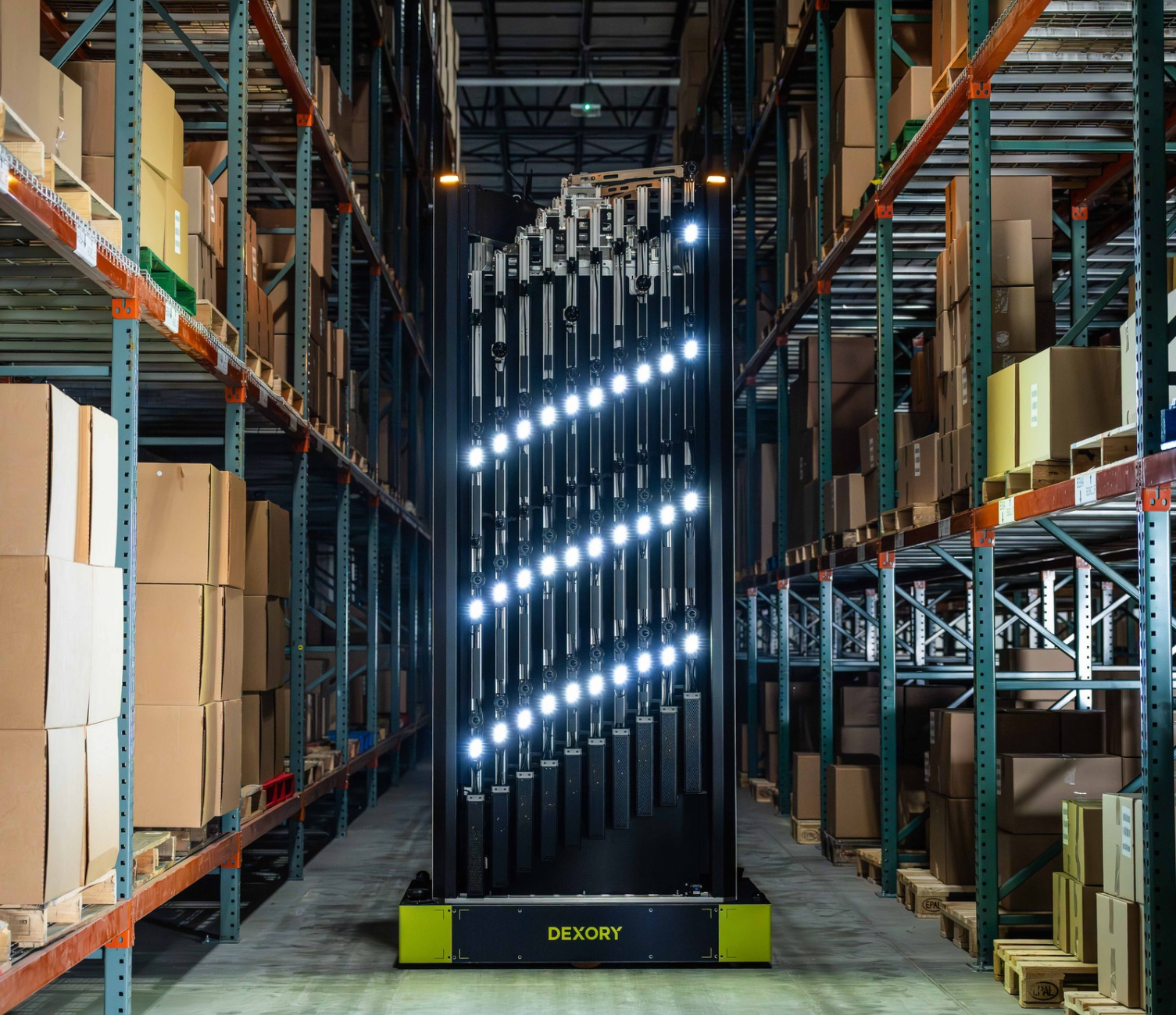
Every autonomous scan combines barcode reads, high-resolution imagery, depth data, and 3D spatial data. Together they create a much richer record of each warehouse location.
A barcode scan tells you what is there. Spatial data tells you exactly where it sits in three dimensions. High-resolution imagery tells your its condition. Depth data tells you how much space it occupies.
Combining all of these - across every location, repeatedly - creates something no single data type can produce on its own: a complete, continuously updated picture of physical reality.
That means understanding not just what is there, but where it physically is.
Is the location occupied? How much space does each location use?
How does stock sit in the location? What does the location look like? And how has that changed over time?
And the difference in quantity is just as important as the difference in quality.
Because data collection is independent of people, forklifts, or any other warehouse process, robots can scan repeatedly. This creates millions of observations and constantly refreshes the physical picture.
So instead of a data point that says:
“Pallet X was scanned at location A.”
you build a much richer record:
“Pallet X is physically at location A. This is what it looks like and whether it has any damages. This is how it sits. The pallet beneath it is intact. This is how much space it occupies and how many items it has on it.
This is what was here previously, where it travelled from, how fast and when that changed. And this is how physical reality compares with what the warehouse management system (WMS) says should be here.”
Multiply that across every location, repeatedly, and you have something completely different from an automated stock count.
You have a constantly updated digital representation of the warehouse.
And that's where the real difference starts
More data types + more coverage + greater frequency creates significantly more use cases.
The same Dexory infrastructure identifies misplaced stock, empty space, grouping opportunities, slotting issues, and replenishment needs. It also flags pick-face problems, storage compliance issues, and day-to-day patterns.
What makes this possible is that all of these uses cases draw from the same underlying data layer. There is no separate scan for space utilisation and a different one for inventory accuracy. The same physical data that tells the inventory team what is where also tells the operations team where space is being wasted, tells labour planners where bottlenecks are forming, and gives management a reliable picture of how the building is actually performing.
So the value extends beyond the inventory team.
It extends into operations, space, labour, productivity, service levels and management decision-making.
DexoryView then combines this physical data with WMS and other warehouse data. And with DexoryView Adapt, teams can ask questions, diagnose problems and turn those insights into recommended actions.
That is why warehouse size isn't the deciding factor.
A smaller warehouse can have expensive inventory, limited labour, tight space or demanding SLAs, or complex supply chain management challenges. A larger warehouse may have completely different challenges - from customer expectations to operational scale.
The question is simply:
How valuable is it to know what's happening in your warehouse - in real time?
Because the biggest opportunity isn't automating the scan.
Turning continuous physical visibility into better warehouse decisions.
For teams evaluating scanning technology, the right question is not which solution scans fastest. It is which solution produces data rich enough, frequent enough, and consistent enough to support decisions across the entire operation - not just the cycle count.