The warehouse investment decision that can't wait
September 3, 2026

• Two deadlines collide every autumn: audit season (manual stock validation) and budget submissions. Teams that connect them enter next year strongest.
• ODW cut errors 70% and audits to under 24 hours; DHL's 1% OTIF gain meant 30,000 more on-time deliveries.
• DexoryView removes budget objections: no capex, results within days, deployment under two weeks, audit-grade certification.
• Deferring compounds costs (missed picks, reactive labour); acting now still allows deployment before peak.
Two deadlines are converging right now: budget submissions and peak season preparation. The operations teams that treat them as one conversation are the ones that enter next year in a position of strength.
A pattern repeats itself across the industry every autumn. Warehouse operations managers and leaders know what needs to change as they've lived through enough peaks to know exactly where the gaps are.
But the timing never feels right. Peak is too close, then it's too busy, then it's over and the focus shifts to recovery. By the time budget season arrives, the window to act has already closed.
It hasn't. But it's closing.
Two pressures, one opportunity
Right now, most warehouse operations teams are navigating two things at once.
The first is audit season. That means stock validation and cycle count alignment. This is the uncomfortable process of aligning what the system believes with what's physically in the building.
For many teams, this is still a manual exercise. Labour-intensive, disruptive to live operations, and rarely as accurate as it needs to be.
The second is the annual budget cycle. Submissions are due. Teams need to decide now where to invest next year and whether to deploy existing budget before the year closes.
Most teams handle these as separate conversations, but the ones that connect them move fastest.
Audit season reveals exactly where the gaps are. Budget season is the mechanism to fix it. Used together, they create a rare opportunity. Teams can enter next year - and next peak - with the day-to-day foundation that most warehouses spend years trying to build.
.jpg)
What changes when you have full visibility
The proof points from Dexory customers aren't theoretical projections. They're outcomes achieved by teams that made the investment before they needed it most.
ODW Logistics worked to reduce errors by 70%. They also compressed full site audits from weeks to under 24 hours. The result was a level of warehouse clarity that simply wasn't possible before.
ID Logistics shifted 41% of the hours their team previously absorbed in manual stock management into higher-value activity. The result wasn't just efficiency, it was 100% reliable stock visibility across multiple sites, fully integrated from day one.
DHL demonstrated that a 1% gain in OTIF performance translated to 30,000 additional on-time deliveries annually. That's the kind of figure that reframes a technology conversation from a cost discussion to a commercial one.
DCL Logistics achieved a 14% accuracy improvement. They reclaimed 16 hours of productivity per day, save time on inventory counts by running them ten times faster than before.
The common thread isn't scale or complexity. It comes down to timing. Each of these teams invested before the pressure was at its highest - and the returns were visible almost immediately.
What makes the internal case easier
Getting warehouse technology approved isn't always straightforward. Competing priorities, cautious budget holders, and legitimate questions about implementation risk all slow things down. Dexory removes most of those objections before they become blockers.
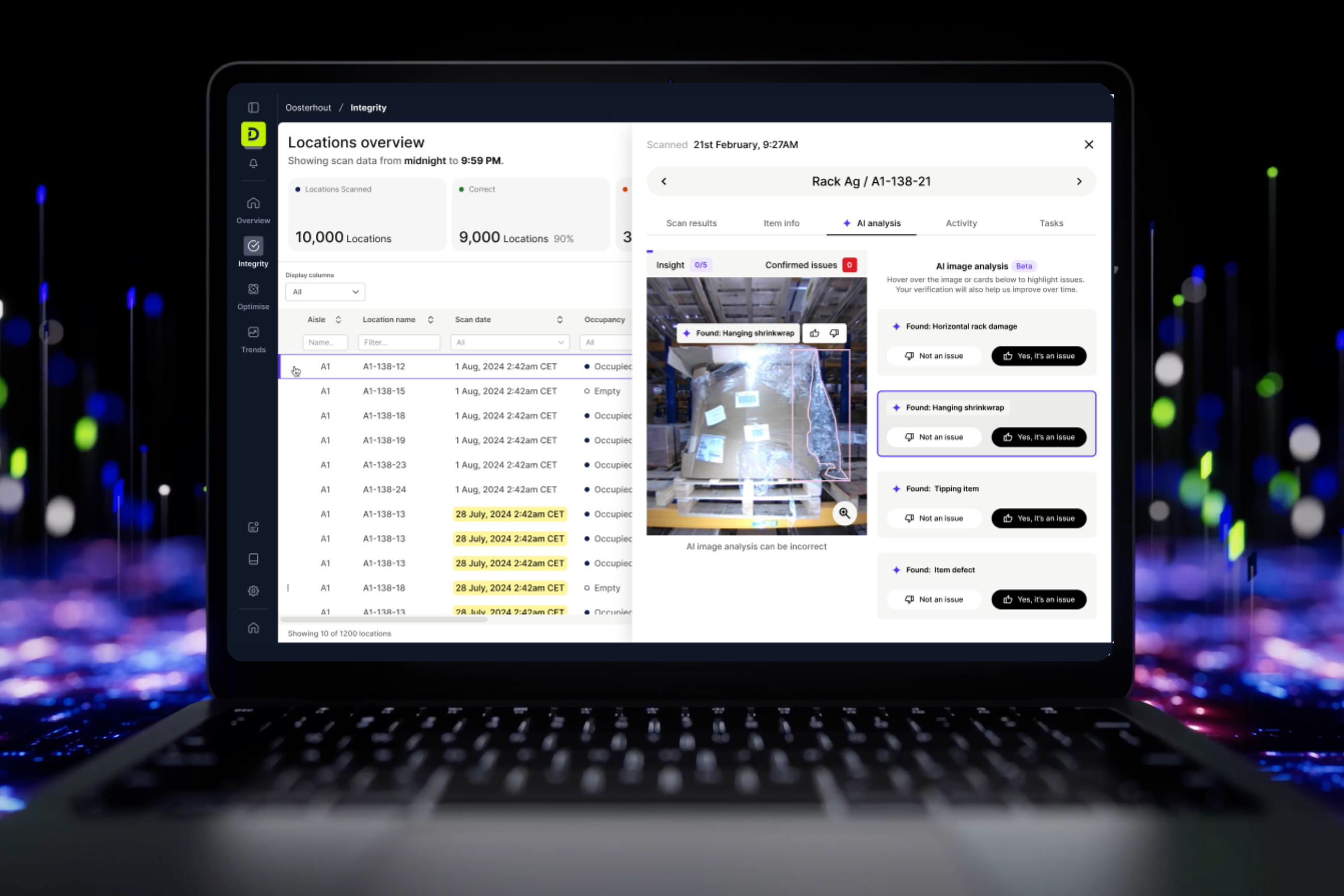
No capital expenditure. DexoryView runs on a subscription basis - no hardware purchase, no infrastructure spend, no lengthy procurement cycle. For finance teams scrutinising capital allocation, it's a more cost effective and significantly different conversation.
Measurable returns within days. Improvements in accuracy, exception identification and team productivity are typically visible within the first week. A budget submission doesn't need to rely on projected benefits. It can reference real, documented outcomes from comparable operations.
Deployment in under a fortnight. For teams with a year-end budget to allocate, that timeline means tangible results before the financial year closes. For those planning ahead, a decision made today means full capability well before peak arrives.
Audit-grade data governance. DexoryView carries SOC and ISO certifications. Major auditors formally recognise it as a compliant auditing tool. That means teams no longer need external annual counts.
Teams that deploy it don't just improve their operations; they walk into audit season with documented, proven accuracy that satisfies the most rigorous scrutiny.
The real cost of deferring
Pushing warehouse technology to the next budget cycle feels like a neutral decision. It rarely is.
The warehouse gaps that exist today don't sit still. Discrepancies between system data and physical reality compound over time. So do manual processes and stock positions nobody is fully confident in. The costs appear in missed picks, reactive labour, and customer relationships that erode gradually.
The teams that perform best through peak aren't the ones that scrambled hardest when volume spiked. They're the ones that have already resolved the problems that cause scrambling. That resolution starts with a budget decision. And the deployment timeline means there's still time for that decision to matter this year.
If you're putting your submission together now, we can help you model the return for your specific operation.