The real cost of not knowing what's in your warehouse
April 9, 2026

And what the numbers look like when you do
You know what a $264,000 mistake looks like in a warehouse? It looks like a normal Tuesday.
Stock marked as present that isn't there. A pallet nobody can locate. A customer order that ships wrong, or late, or not at all. These aren't catastrophic failures, they're the slow, grinding cost of operating without reliable visibility. And for most warehouse managers, they're simply accepted as the price of doing business.
They don't have to be.
The question every warehouse manager is actually asking
Beneath the talk of digital transformation and Physical AI, most operational leaders want answers to two very simple questions:
Is my stock where I think it is? And: am I using my space as well as I could?
Everything else, the efficiency gains, the cost reductions, the compliance improvements, flows from getting those two things right. The challenge has always been that answering them accurately requires enormous amounts of manual labour, and the data is almost always out of date by the time it reaches a decision-maker.
That's the problem that autonomous robotics and AI-powered warehouse platforms are beginning to solve in a meaningful way. Not by replacing people, but by giving them information that was previously impossible to have.
.jpg)
What the data actually shows
To understand the real-world return on investment from deploying an intelligent warehouse platform, Forrester Consulting conducted a Total Economic Impact™ study based on feedback from existing customers, modelled across a composite organisation over three years. The findings are worth sitting with:
219% average ROI over three years
$4.31M total value delivered to the business
<6 months to breakeven on the investment
But the headline figures only tell part of the story. The more instructive detail is in where that value comes from.
One of the most significant drivers is improved inventory visibility, which sounds straightforward until you consider that one organisation recovered $264,000 in previously untraceable products simply by knowing, in real time, where everything was. That's not a technology story. That's an operations story that technology made possible.
Investigation time drops from up to 24 hours to around 30 minutes. That's not a marginal improvement, it's an entire working day handed back to your team, every time something goes wrong.
The Forrester study also found that reduced fines from incomplete or late customer order fulfilment delivered savings of $639,748 over three years, while better space management, reducing empty or misused slots, contributed a further $216,370. Racking damage, which is often underreported because it accumulates gradually and invisibly, was reduced by $293,868 over the same period.
What it looks like in practice
Numbers from studies are useful, but there's something more clarifying about seeing how this plays out in real operations.
ID Logistics
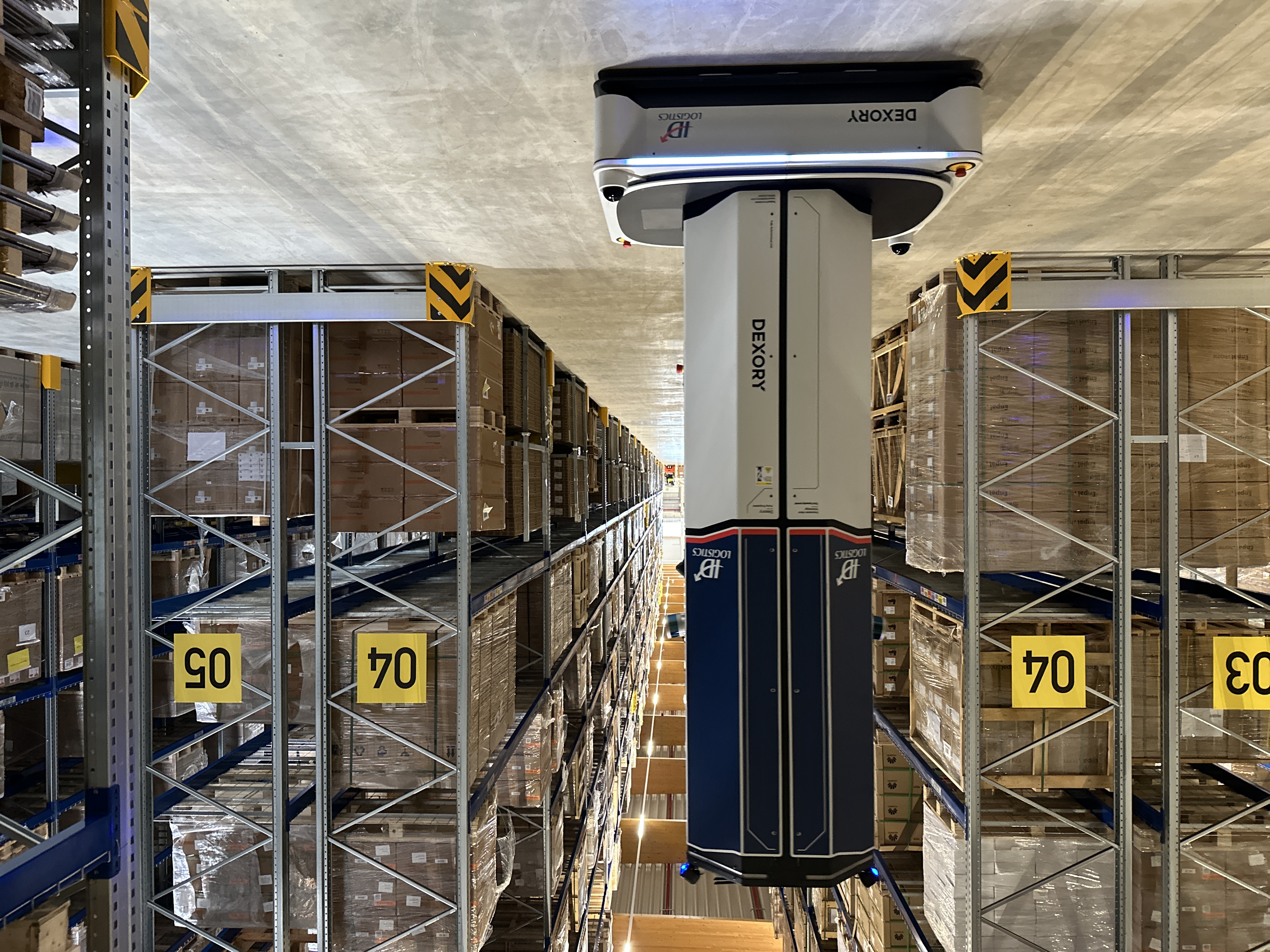
Deploying the full autonomous scanning solution across global sites, ID Logistics consistently averaged 98% putaway accuracy within a short timeframe. Manual inventory checks dropped by 41% in just two months, and overall inventory accuracy improved by 5%. The time saving alone represents a meaningful reallocation of labour toward higher-value tasks.
Two phases of getting it right
There's a logical order to how warehouse intelligence works best, and it mirrors the two questions we started with.
First: establish what's true
Before any optimisation is possible, you need accurate inventory. Features like real-time scan summaries, pick count validation, double deep scanning, and rental pallet tracking create the foundation for 99.9% inventory accuracy, eliminating the lost goods, misplaced stock, and space inefficiencies that erode margin quietly and persistently.
A new development worth noting here: at Manifest 2026, a computer vision capability called Storage Health was announced, which runs with every robot scan to flag empty pallets, item or pallet defects, damaged racking, and tipping items. Issues are surfaced before they become safety incidents or compliance failures, earlier detection, faster response, less cost.
Then: make better decisions
Once you trust your inventory data, you can start acting on it intelligently. Outbound optimisation, slotting verification, weight restriction analysis, and congestion mapping give managers the insight to shift from reactive firefighting to proactive planning. Everything in one place, updating in real time.
Implementation: faster than you'd expect
One of the persistent barriers to adopting new warehouse technology is the fear of disruption. New systems that require months of integration, expensive capital investment, or wholesale changes to existing processes are a hard sell, especially in high-throughput environments where any downtime has real consequences.
The implementation timeline here is one to two weeks. There's no CAPEX requirement. And the platform operates independently of existing Warehouse Management Systems, so existing processes remain intact. It's designed to sit alongside how your operation already works, not to replace it.
A note on trust and compliance
For warehouse operators who need their data to serve a dual purpose, operational and auditable, the platform carries SOC 1, SOC 2 Type I, and ISO 27001 accreditation. This means it can function not just as a day-to-day operational tool, but as a formal auditing resource in its own right. In regulated environments or where customer SLAs are contractually enforced, that distinction matters.
Calculate your own return
The Forrester findings are based on a composite organisation, which means your numbers will differ — for better or worse depending on your current baseline. Forrester has built an ROI calculator that lets you input your own operational data and see what the return could look like for your specific operation.
The more interesting question isn't whether there's an ROI case for better warehouse visibility. The data makes that fairly clear. The more interesting question is: how much is the status quo costing you right now?
Ready to find out? Book a free demo to see what real-time warehouse intelligence looks like in practice.