Dexory Ereignisse
Nehmen Sie an diesen informativen Veranstaltungen und kommenden Webinaren teil, die sich mit den neuesten Entwicklungen in der Logistik und Lagerhaltung befassen.
.avif)

All upcoming events
All upcoming webinar
CSCMP Edge Conference 2026
Step into EDGE 2026, where supply chain’s brightest minds gather for high-impact learning, transformative innovations, and powerful networking - all in a vibrant, immersive environment designed to inspire and connect you.

October 4-7, 2026

Nashville, US

NextGen Supply Chain Conference 2026
Designed for senior supply chain, operations, and logistics leaders, NextGen brings together practitioners, innovators, and solution providers for candid, experience-driven conversations about what is working - and what’s next.
October 21-23, 2026
Nashville, US
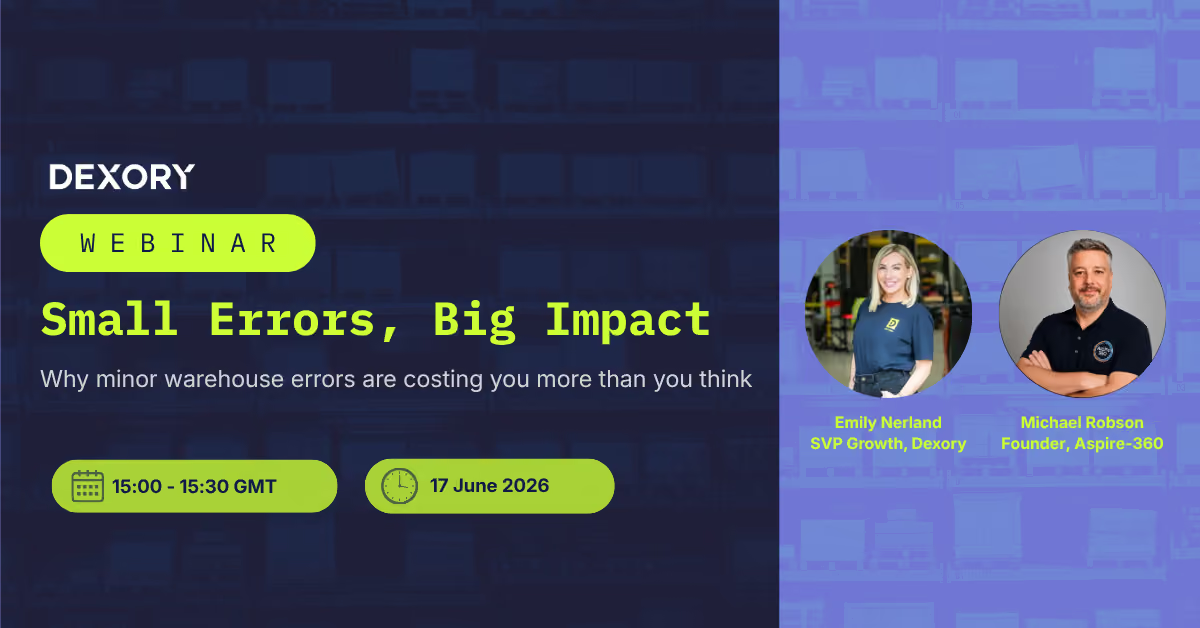
On-demand webinar: Small Errors, Big Impact
Watch Emily Nerland, SVP of Growth at Dexory and Mike Robson, Founder of Aspire-360 talk through the real cost of operational drift: from misplaced inventory and inaccurate counts to the downstream impact on fulfilment speed, customer satisfaction, and profitability. Drawing on real-world data and practical insights, this session will give you a clear-eyed view of where your warehouse is leaking value and how to stop it.
June 17th, 2026
On-demand
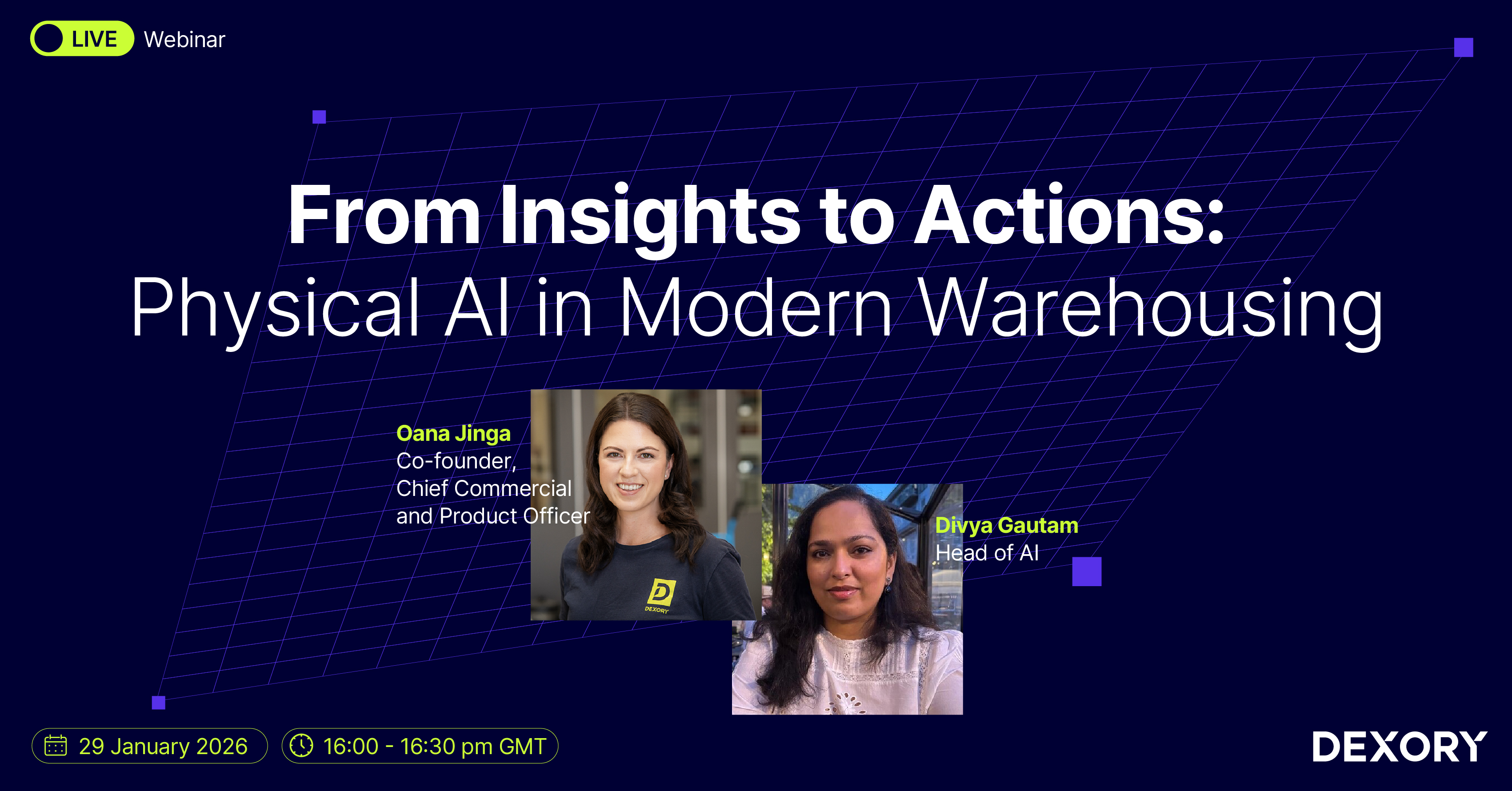
On-demand webinar: From insights to actions: Physical AI in modern warehousing
Watch Oana (CC&PO and Co-founder) and Divya (Head of Artificial Intelligence) dive into how AI is being used in warehouses today, how AI can transform the logistics industry and make it work effectively and the potential ROI achieved by the use of it.
January 29, 2026
On-demand
Sind Sie bereit, Ihr Lager in eine dynamische, effiziente und intelligente Betriebsumgebung zu verwandeln?
Neueste Einblicke

Warehouse scanning technology: why data collection differs
Warehouse scanning has evolved quickly. Across distribution centers, handheld scanners, forklift-mounted cameras, drones and autonomous robots can all make inventory capture faster.
But they are not solving the same problem. The data collection methods each technology uses determine what questions it can actually answer.
The important question isn't just “How quickly can I scan my warehouse?” The better question is: “How consistently can I understand what is happening - and what can I do with that information?”
%20(1).jpg)
Ground truth: the foundation physical AI is built on
Most businesses can answer two questions about their warehouse with confidence: what came in through the door, and what left it.
Everything that happens in between is murkier than most operators would like to admit.
The WMS says 15,000 units are in bay C4. The ERP agrees. But when did anyone last physically verify that?

Five warehouse questions to answer before peak season
Most warehouses head into Q4 relying on WMS data that doesn't reflect physical reality. Here are the five questions operations leaders need to answer, and why most can't.