Expert thought leadership, data driven insights
With a focus on industry and automation, highlighting the latest innovations and developments in the robotics industry.


Featured insights
Dexory secures $80M funding to drive global expansion goals and development of groundbreaking technology
Dexory, today announced it has successfully closed an $80 million Series B funding round. The round was led by DTCP, with participation from Latitude Ventures, Wave-X and Bootstrap Europe, along with existing investors Atomico, Lakestar, Capnamic and several angels from the logistics industry.
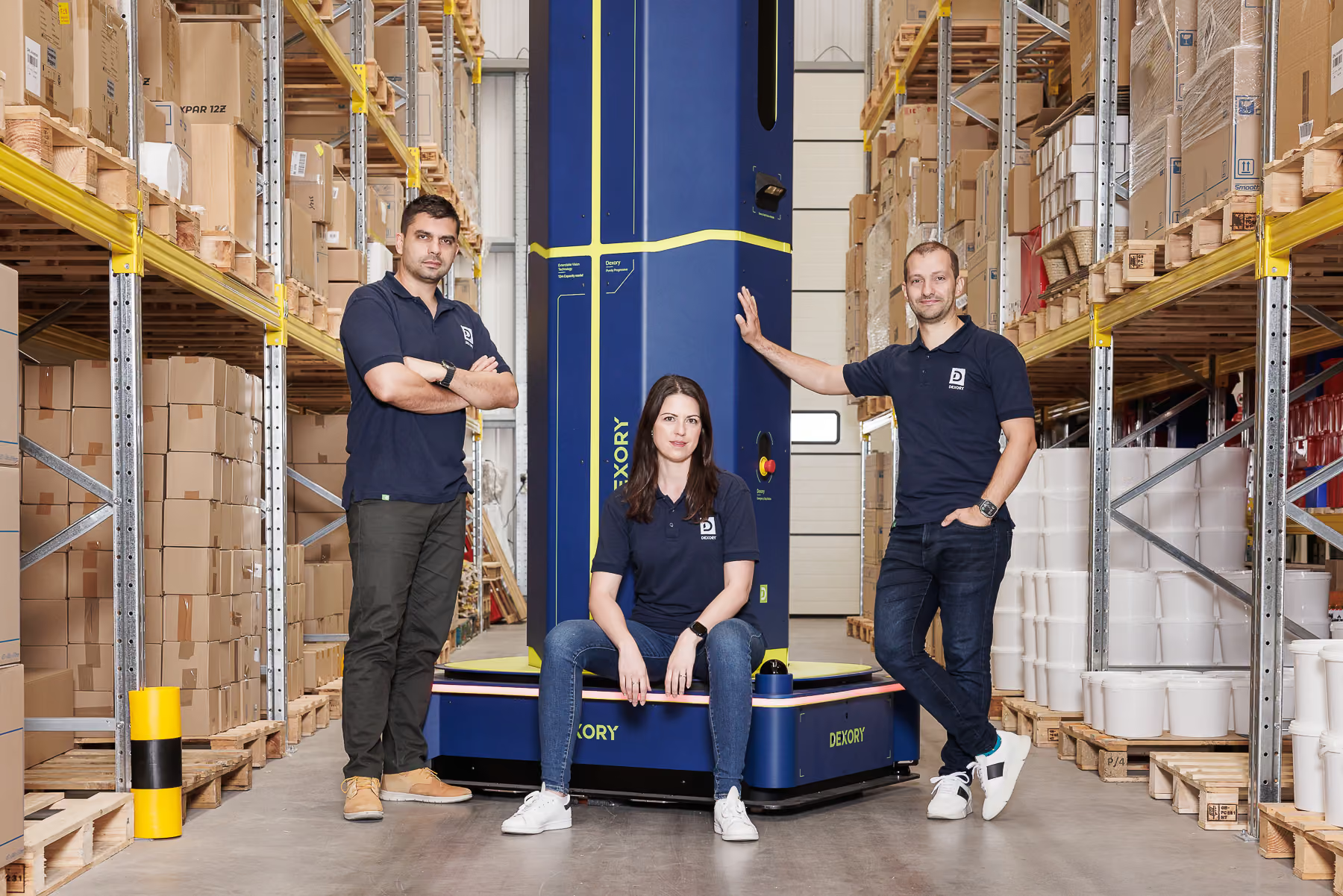

Warehouse scanning technology: why data collection differs
Warehouse scanning has evolved quickly. Across distribution centers, handheld scanners, forklift-mounted cameras, drones and autonomous robots can all make inventory capture faster.
But they are not solving the same problem. The data collection methods each technology uses determine what questions it can actually answer.
The important question isn't just “How quickly can I scan my warehouse?” The better question is: “How consistently can I understand what is happening - and what can I do with that information?”
%20(1).jpg)
Ground truth: the foundation physical AI is built on
Most businesses can answer two questions about their warehouse with confidence: what came in through the door, and what left it.
Everything that happens in between is murkier than most operators would like to admit.
The WMS says 15,000 units are in bay C4. The ERP agrees. But when did anyone last physically verify that?
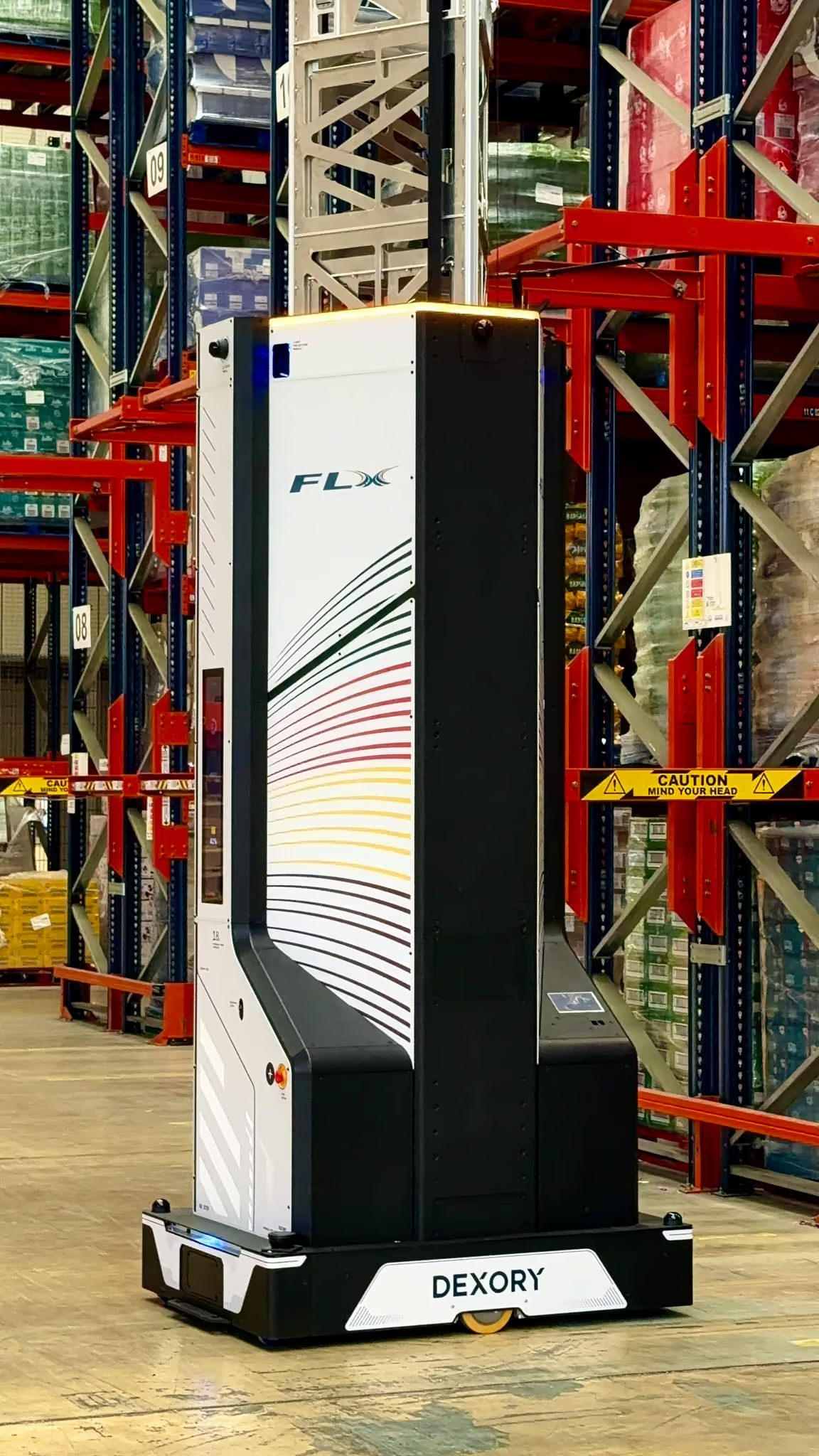
Built in, not bolted on: How FLX Logistics started right
When a new warehouse opens its doors, there's usually a settling-in period; weeks, sometimes months, where the team is still learning the building as much as it's operating in it. Stock locations get bedded in gradually. Discrepancies surface and get chased down one at a time. Trust in the data builds slowly, through trial, error, and repetition.
FLX Logistics’ Peterborough site decided it didn't want that runway.
Latest insights
.png)
From visibility to intelligence to action: The next chapter for Dexory
Six months after launching DexoryView Adapt (‘Adapt’), our customers are showing us how AI and physical intelligence are changing warehouse operations - and where the industry is heading next.

Meet the team: Zoë Cavell, General Counsel
I’m General Counsel here at Dexory, looking after legal, compliance and risk. I qualified as a solicitor back in 2005, originally working in commercial property and then transitioning into general commercial work when I moved in house. I’ve also done other jobs - legal ops and training, property management, teaching and working as a buyer for an airport retailer.
Warehouse scanning technology: why data collection differs
Warehouse scanning has evolved quickly. Across distribution centers, handheld scanners, forklift-mounted cameras, drones and autonomous robots can all make inventory capture faster.
But they are not solving the same problem. The data collection methods each technology uses determine what questions it can actually answer.
The important question isn't just “How quickly can I scan my warehouse?” The better question is: “How consistently can I understand what is happening - and what can I do with that information?”
Ground truth: the foundation physical AI is built on
Most businesses can answer two questions about their warehouse with confidence: what came in through the door, and what left it.
Everything that happens in between is murkier than most operators would like to admit.
The WMS says 15,000 units are in bay C4. The ERP agrees. But when did anyone last physically verify that?

Five warehouse questions to answer before peak season
Most warehouses head into Q4 relying on WMS data that doesn't reflect physical reality. Here are the five questions operations leaders need to answer, and why most can't.
.jpg)
Retail warehouse optimisation: visibility to intelligence
Warehouse space is not just about storing and moving products. Making every square metre and every process perform under pressure is what matters. This pressure is increasing. E-commerce is growing, labour costs are rising, and global uncertainty and tariffs are making operations less predictable.
Déjà adopté par


.avif)




Upcoming events

CSCMP Edge Conference 2026
Step into EDGE 2026, where supply chain’s brightest minds gather for high-impact learning, transformative innovations, and powerful networking - all in a vibrant, immersive environment designed to inspire and connect you.

October 4-7, 2026

Nashville, US
Ready to evolve your warehouse into a dynamic, efficient, and intelligent operational environment?
Great, we can’t wait to give you a demo.